Claim Your FREE Website Audit & Discover Hidden Growth Opportunities!



Why Is My Website Not Converting? The 2026 Guide to Fixing Your Revenue Leaks
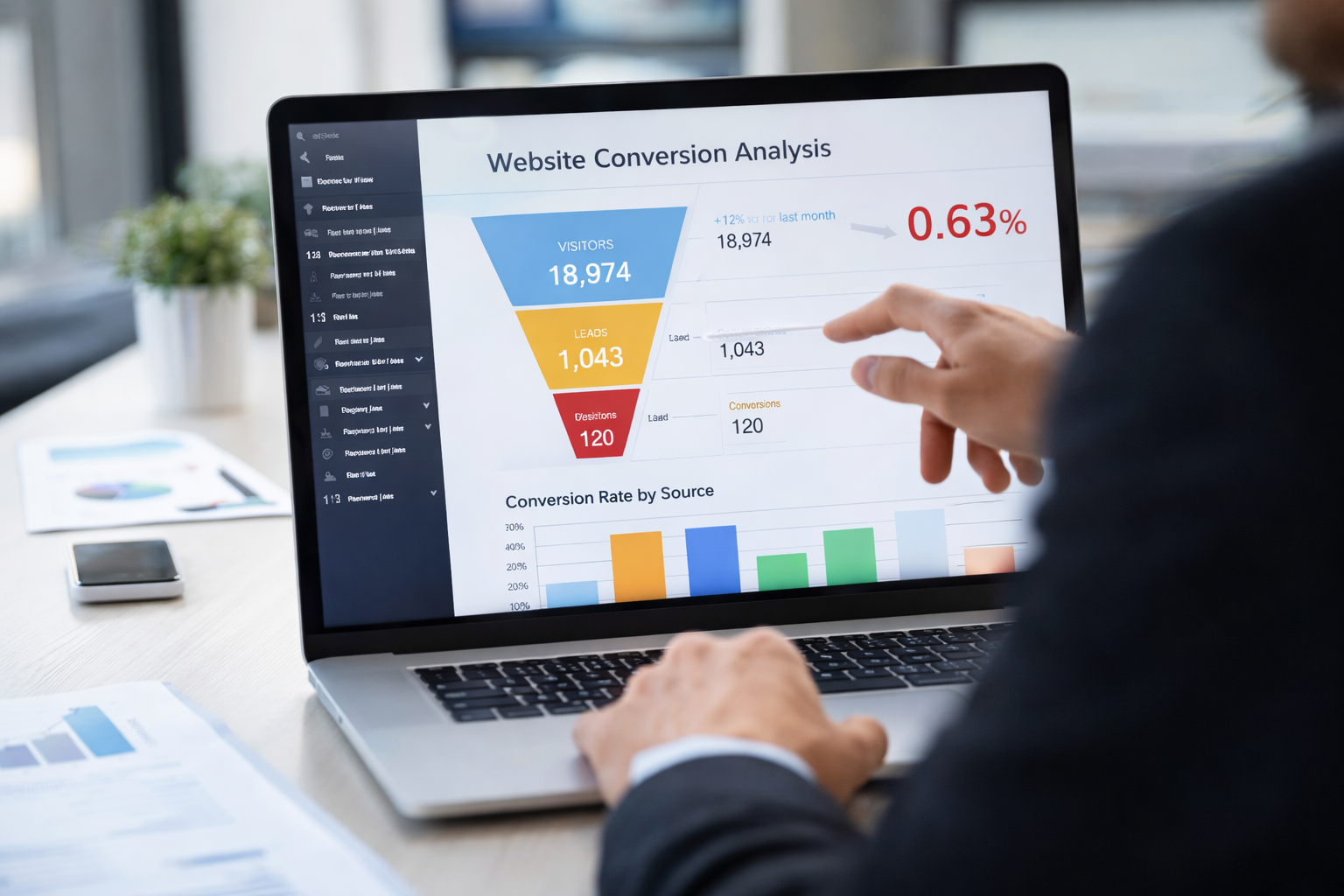
TL;DR Summary: If you are asking “why is my website not converting”, the problem is rarely traffic. In 2026, low conversion rates usually happen because of weak Information Gain, low Entity trust, poor UX signals, or slow interaction speed. Modern search engines evaluate content depth, experience signals, and usability metrics like Interaction to Next Paint (INP). Fixing these issues can significantly improve lead generation, sales, and engagement.
The Invisible Business Trap: When Traffic Doesn’t Equal Sales
Many businesses wonder why is my website not converting even when analytics show consistent traffic. Rankings may look good, impressions may increase, yet enquiries remain low and conversion rate does not improve.
In the era of AI-driven search, users quickly identify generic websites that look similar to competitors. When content lacks originality or real experience signals, users lose trust quickly and leave the website without taking action.
Search engines now evaluate content uniqueness using Information Gain concepts. According to Google Helpful Content Guidelines, content must provide original value instead of repeating existing ideas.
If your website provides the same structure, wording, or messaging as competitors, users feel no strong reason to choose your service. This is one of the most common answers to why is my website not converting in modern SEO environments.
How to Fix Website Conversion Issues in 2026
1. Improve Information Gain and Content Originality
Google algorithms now reward websites that demonstrate unique insights, practical experience, and useful explanations. Content should not simply repeat common advice like “improve design” or “write better copy”.
Instead, demonstrate real findings from audits, testing, or optimization work. For example, our UI/UX Design audits show that intrusive popups often reduce engagement when shown too early.
Studies published on Nielsen Norman Group also confirm that poor usability increases bounce rates and reduces trust.
Use screenshots, diagrams, or process visuals instead of generic stock photos. Unique visuals help search engines understand your content provides real expertise.
2. Use Entity SEO Instead of Only Keywords
Search engines now understand topics through entities instead of simple keyword matching. When businesses ask why is my website not converting, the real issue is often weak topical authority.
Content should naturally include terminology related to:
- Conversion optimization
- Technical SEO
- User experience design
- Website performance
- Trust signals
Using relevant terminology signals expertise and improves visibility in semantic search systems. Our SEO Solutions focus on improving entity signals through structured content and internal linking.
Google explains structured data importance in their Structured Data documentation.
Advanced schema markup helps search engines identify your expertise in WordPress Development and CRO optimization.
3. Demonstrate Real Experience and Trust Signals
Experience signals are part of E-E-A-T principles (Experience, Expertise, Authority, Trust). Websites that demonstrate real-world testing perform better in both rankings and conversions.
Examples of experience signals include:
- real screenshots of improvements
- case studies
- before and after results
- technical audit insights
- conversion testing experiments
When businesses investigate why is my website not converting, they often discover missing trust elements such as testimonials, case studies, or detailed service explanations.
Technical workflows such as Website Maintenance logs can demonstrate ongoing improvements.
4. Improve Technical Performance and Interaction Speed
Website speed directly affects conversion rates. Google introduced Interaction to Next Paint (INP) as a core responsiveness metric.
Research from web.dev shows that faster interaction improves engagement and reduces abandonment.
| Metric | Recommended Target | Why it matters |
|---|---|---|
| INP | <200ms | Improves responsiveness perception |
| LCP | <2.5s | Maintains attention |
| CLS | <0.1 | Prevents layout shift issues |
If users experience delay when clicking buttons or submitting forms, they often leave immediately. This technical friction is a major reason why is my website not converting.
5. Structure Content for AI Search and Featured Answers
AI search engines extract clear answers from structured content. Articles that clearly define the problem and provide step-by-step solutions have higher visibility.
Best practices include:
- single H1 structure
- clear H2 sections
- organized H3 subtopics
- short paragraphs
- structured bullet points
Our Marketing Automation strategies often rely on structured content to improve lead generation efficiency.
Conclusion
If you are still asking why is my website not converting, the solution is rarely increasing traffic alone. Instead, focus on improving clarity, trust, usability, and performance.
Websites that demonstrate expertise, provide unique insights, and maintain strong technical performance consistently achieve better conversion results.
Request a Website Audit to identify hidden conversion problems and improve performance.